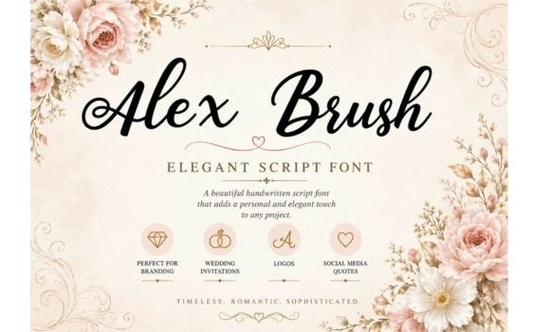
If you're looking for a graceful, hand-drawn script font that feels personal and polished not stiff or overly formal the Alex Brush Font is a thoughtful choice. It’s one of those fonts that works quietly but effectively: soft curves, even spacing, and subtle variation in stroke weight give it warmth without sacrificing readability. Whether you're designing wedding stationery, a small-batch product label, or an Instagram quote graphic, Alex Brush adds quiet elegance without demanding attention.
What kind of projects does Alex Brush work well for?
This font shines where authenticity and refinement matter most. Think handwritten-style invitations, boutique skincare packaging, or a cozy café’s seasonal menu board. Because its letterforms flow naturally without extreme contrast or sharp angles it reads as approachable, not fussy. Designers often reach for it when they want to signal care and intention, not just decoration.
It’s especially popular among print-on-demand sellers creating greeting cards or wall art with romantic or nostalgic themes. Small business owners use it for logo lockups where a friendly yet premium voice matters like a handmade candle brand or a floral studio. Crafters appreciate how well it pairs with watercolor textures or soft paper backgrounds.
How does it compare to other elegant script fonts on Creative Fabrica?
Alex Brush sits comfortably between highly decorative and ultra-minimalist scripts. It’s more relaxed than The Bileso Font, which has sharper terminals and bolder swashes, and less ornate than Raisin Cookie Family, which leans into playful bounce and extra flourishes. If you’ve used Candy Diary Font, you’ll notice Alex Brush has gentler connections between letters and a more consistent rhythm making it easier to set longer phrases without visual fatigue.
Compared to Slowing Font, Alex Brush feels more grounded and legible at smaller sizes (like 14–16pt for body text in invitations), while Slowing excels in large-scale display use. All four are excellent but the right one depends on your project’s tone and scale.
Is Alex Brush easy to use across different software and formats?
Yes. It includes standard OpenType features like ligatures and alternate characters, and it’s available in both OTF and TTF formats so it works smoothly in Canva, Adobe Illustrator, Photoshop, Procreate, and even Cricut Design Space. No hidden learning curve: install it once, and you’re ready to type. You won’t need special glyphs panels or complex layering to get beautiful results.
One practical note: because it’s a connected script, some letter combinations (like “st” or “th”) have built-in ligatures that improve flow. These activate automatically in most modern design apps but if you’re using older software or web platforms, you may want to manually adjust spacing for consistency.
Who tends to get the most out of this font?
Small business owners building a cohesive brand identity especially in wellness, beauty, or lifestyle niches often find Alex Brush fits their voice without feeling overused. Print-on-demand creators report strong engagement on products like “You Are Enough” art prints or bridal shower signage. Hobbyists who hand-letter occasionally also like using it as a reference or base layer before adding their own ink details.
It’s not ideal for dense paragraphs or technical documents, and it’s not meant to be a standalone headline font in bold sans-serif contexts but that’s not its purpose. It’s a specialist, not a generalist. And that’s why it works so well when used intentionally.
Where can you see real-world examples?
You’ll spot Alex Brush in subtle ways: on artisanal jam labels, in minimalist wedding websites, or as part of a two-font branding system (paired with a clean sans-serif like Montserrat or Poppins). Its versatility comes from restraint not flashiness. For inspiration, you can explore live usage examples on Alex Brush Font’s Creative Fabrica page, where designers share mockups and layered files.
Other script fonts worth browsing alongside it include Candy Diary Font, Raisin Cookie Family Font, The Bileso Font, and Slowing Font each with its own personality and best-use case.
Before downloading or licensing:
- Check the license terms especially if you plan to use it in client work or digital products you’ll resell
- Test it at your intended size and on your intended background (light/dark, textured/plain)
- Try pairing it with one neutral sans-serif font to see how balanced the combination feels
- Preview any included alternates or swashes you might not need them all, but having options helps refine tone
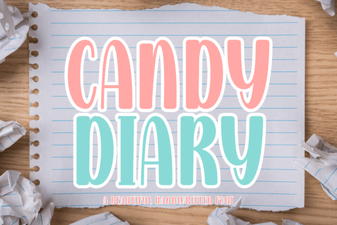 Candy Diary Font Ideas for Creative Projects
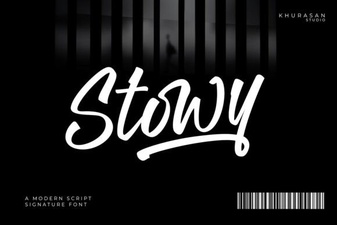 Stowy Font: a Creative Typography Toolkit for Designers
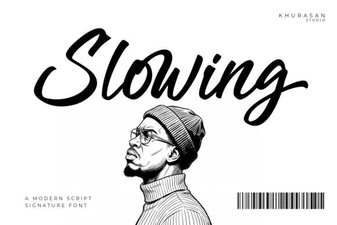 Typography Principles for Slowing Fonts in Design
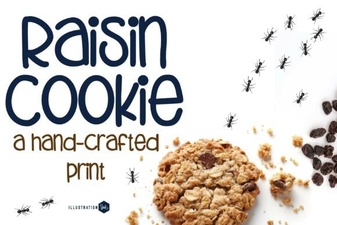 Free Family Cookie Recipe Fonts & Designs
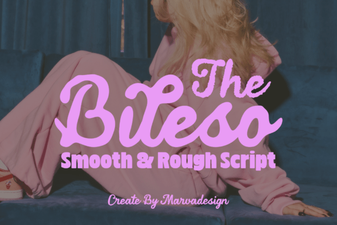 The Bileso Font: a Modern Typographic Toolkit
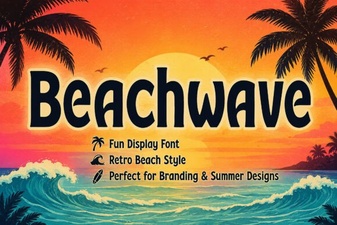 Design Projects with Beachwave Font Style